ARTICLES - HOT OFF THE FAGGOT

'Final pope' already running Vatican?

Benedict might have 'stacked deck' in fulfillment of prophecy

cardinal-bertone-petrus-romanus 
by Jerome R. Corsi 

 Did Pope Benedict XVI line up his successor and then resign to fulfill a 900-year-old prophecy that the next leader of the Roman Catholic Church would be history’s “final pope?”

The idea was posed by Tom Horn, co-author of the book “Petrus Romanus: The Final Pope is Here.”

As WND reported, Horn and his co-author, Cris Putnam, accurately predicted Benedict would become the first pope in nearly 600 years to resign.

Horn believes the last pope, called “Petrus Romanus” in the prophecy by Irish Archbishop St. Malachy, could be the man who is set to take over interim leadership the moment Benedict resigns Feb. 28 at 8 p.m. local time, becoming the acting Vatican head of state.

The claim centers on Cardinal Tarcisio Pietro (Peter in English) Evasio Bertone, born in Romano Canavese, Piedmont, the current secretary of state for the Vatican, who Pope Benedict XVI appointed Camerlengo, or Chamberlain, of the Holy Roman Church April 4, 2007.

In the period known as “sede vacante,” when there is no sitting pope, Bertone will be called upon as Camerlengo to serve as the head of the Roman Catholic Church.

Get “Petrus Romanus: The Final Pope is Here” at the WND Superstore

He will be in charge until the College of Cardinals attending the upcoming Papal Conclave in the Sistine Chapel select a new pope.

Did Benedict choose his successor?

Benedict XVI has made decisions that indicate Bertone could be, or at least once was, his choice for successor, Horn told WND.

Working alongside Bertone, Benedict appeared to be “stacking the deck” in Bertone’s favor Jan. 6, 2012, when he named 22 new cardinals. Most are Europeans, primarily Italians, already holding key Vatican positions.

As a result, Europeans currently number over half of all cardinal-electors, 67 out of 125. Nearly a quarter of all voters in the conclave will be Italian.

“When he appointed these new cardinals,” Horn said, “Benedict seemed to put his definitive stamp on an Italian successor, stacking the College of Cardinals, those who could be called upon to give Bertone the so-called apostolic chair of St. Peter.”

Horn said the idea was not Benedict’s alone.

Most Vatican experts attribute the large number of Italian appointments to the influence of Bertone, he said.

WND sources in Rome close to the Vatican previously suggested Benedict may have resigned in part because he wanted to have a hand, even if indirect, in influencing the selection of his successor.

The sources further argue that by selecting “Benedict” as his papal name, Cardinal Josef Ratzinger, though not a priest of the Benedictine Order, sought to identify his papacy with Malachy’s prohecy that the next-to-last pope would be identified by the epithet Gloria olivae, translated as “Glory of the Olive,” knowing the Benedictine Order is associated by tradition with olives.


By setting up the College of Cardinals to elevate an Italian cardinal to the papacy, Pope Benedict XVI could help fulfill the Malachy prophecy, making Cardinal Bertone – “Peter of Romano” by virtue of one of his given names and his place of birth – the “final pope.”

On Tuesday, Vatican spokesman Rev. Federico Lombardi told reporters at a Vatican briefing that Pope Benedict XVI would have no say in the selection of his successor, telling reporters the pope “will surely say absolutely nothing about the process of the election” for his successor.

Benedict “will not interfere in any way,” Lombardi insisted.

The Third Secret of Fatima

Horn suspects Cardinal Bertone is at the center of a Vatican cover-up to prevent the release of the complete version of what is known as the highly controversial “Third Secret of Fatima,” allegedly given by the Virgin Mary in an appearance to three shepherd children in Fatima, Portugal, July 13, 1917.

Bertone, who turned 78 in December, had a long history with Cardinal Ratzinger before he became Pope Benedict XVI.

From 1995 to 2002, Ratzinger worked with Bertone as his No. 2 at the influential Congregation for the Doctrine of the Faith in the Vatican.

A few months after he was elected pope, Benedict asked Bertone to take up the position of Vatican secretary of state, the position Bertone holds to this day.

In January 2010, when Bertone reached 75, the age of retirement for Curia cardinals, he presented a letter of resignation to the pope. Benedict was adamant he needed Bertone to stay on as Vatican head of state, because he wanted to maintain “their precious collaboration,” as reported by Andrea Tornielli in the Italian newspaper La Stampa.

Benedict has steadfastly supported Bertone through a series of crises that have called into question Bertone’s integrity and honesty, including a money-laundering scandal involving the Vatican Bank, formerly known as the Institute for Works of Religion, or IOR. The scandal resulted in the sacking of the bank’s head, Gotti Tedeschi, a highly respected Italian economist and banker, as well as Paolo Gabriele, the pope’s butler, who was criminally prosecuted for confiscating and photocopying more than 1,000 pages of sensitive Vatican documents over six years that he released to an Italian journalist for publication.

In their role of directing the Congregation for the Doctrine of the Faith, Cardinals Ratzinger and Bertone released for the fist time to the public “The Third Secret of Fatima” at a press conference June 26, 2000.

In 2007, Bertone published a book, “The Last Secret of Fatima,” with a foreword authored by Benedict XVI, defending the publicly released text of “Third Secret” as the entire secret, arguing that in publishing the text, the Catholic Church had withheld nothing.

“The Third Secret of Fatima” involves a highly controversial End Times vision of an assassination attempt on a future pope that is occasioned by moral corruption and lack of faith among the clergy.

Pope John Paul II believed Our Lady of Fatima intervened to save his life in the assassination attempt in St. Peter’s Square at Vatican City on May 13, 1981, the anniversary of the first apparition of the Virgin Mary to the three children of Fatima.

The current controversy began when Italian journalist and television personality Antonio Socci and American attorney Christopher Ferrara began publishing the claim the Vatican had refused to publish a second part of “Third Secret” that contained the words of the Virgin as revealed to the children of Fatima.

Socci and Ferrara contend the hidden text predicts catastrophes for the Catholic Church and the world that involve End Days punishment by God, leading to Jesus Christ returning to earth for Judgment Day.

Did Benedict XVI plan to resign in 2009?

Celestine V was the last pope to resign, in 1294, after only five months in office. He was a hermit who was greatly revered for his sanctity and his miracles.

On April 28, 2009, in a visit to view Celestine’s remains in the badly damaged Santa Maria di Collemaggio after the disastrous 2009 L’Aquila earthquake, Pope Benedict XVI left the woolen pallium he wore during his papal inauguration in April 2005 on Clement’s glass casket as a gift.

To mark the 800th anniversary of Celestine’s birth, Benedict proclaimed the Celestine Year from Aug. 28, 2009, to Aug. 29, 2010.

Benedict was the only pope to visit Pope Celestine V’s tomb, a sign many have taken that he had contemplated resignation for some time before he made the announcement earlier this week.

On Dec. 13, 1294, on the Feast of Saint Lucy, Celestine V read the following statement to the cardinals who assembled to hear his news: “I, Celestine V, moved by valid reasons, that is, by humility, by desire for a better life, by a troubled conscience, troubles of body, a lack of knowledge, personal shortcomings, and so that I may then proceed to a life of greater humility, voluntarily and without compunction give up the papacy and renounce its position and dignity, burdens, and honors, with full freedom. I now instruct the Sacred College of cardinals to elect and provide, according to the cannons, a shepherd for the universal church.”

As recounted by John Sweeney in a 2012 book, “The Pope Who Quit,” Celestine V declared himself “useless,” stepped down from the papal throne and removed his ring, tiara and mantle, handing them to the cardinals who had elected him; he then sat down on the floor.

He put on the dress of the simplest of friars – the gray habit of a Celestine hermit – and secreted away from the crowd outside to return to the mountains.

What will be next for Pope Benedict XVI? Is there a spiritual connection between the hermit pope and the scholar?

Malachy’s predictions

St. Malachy, an Irish saint and the archbishop of Armagh, who lived from 1094 to 1l48, is attributed with a vision of the last 112 popes from which he created a prophetic list. He named with a descriptive epithet each pope in succession from Celestine II, who was pope from 1143-1144, to the present day.

Malachy described the last pope as “Petrus Romanus,” or “Peter the Roman,” writing: “In the final persecution of the Holy Roman Church there will reign Peter the Roman, who will feed his flock among many tribulations; after which the seven-hilled city will be destroyed and the dreadful Judge will judge the people.”

In 1880, M. J. O’Brien, a Catholic priest, published in Dublin a book providing a “historical and critical account” of the prophecy of St. Malachy regarding the succession of the popes.

O’Brien understood that Malachy’s prophecy was declaring that in the reign of the pope identified as Petrus Romanus the end of the world would come, culminating in Jesus Christ descending to earth for Judgment Day.

O’Brien said Malachy’s vision occurred while he was in Rome for a month, visiting and praying at the Eternal City’s many historical and holy sites.
“The sight of the ruins of Pagan Rome, the tombs of the Apostles, the thought of so many thousands of martyrs, the presence of [Pope] Innocent II, who had been obligated to wander so many years in France and elsewhere on account of the anti-pope Anaclete – all this, I say, filled the mind of St. Malachy with deep and sad reflections and he was forced to cry out in the words of the old prophets: ‘Usquequo, Domine non misereberis Sion?’ – ‘How long, O Lord! wilt Thou not have mercy on Sion?’”
O’Brien continued:
And God Answered: “Until the end of the world the Church will be both militant and triumphant. Until the end of time the sufferings of my passion and the mysteries of my cross must be continued on earth, and I shall be with you until the end of the world.” And then was unfolded before the gaze of the holy bishop of Armagh the long line of illustrious pilots who were to guide the storm-tossed bark of Peter until the end.
Malachy gave his manuscript to Innocent II, born Gregorio Papareschi, who was pope from 1130 to 1143. Innocent placed the manuscript in the Vatican archives, where the document remained unknown until its discovery in 1590.

Through the past 900 years, various critics have questioned the authenticity and the accuracy of St. Malachy’s prophecy, often arguing the methods employed by some of Malachy’s interpreters in applying his epithets to certain popes have been tortuous.

In a modern 1969 version of Malachy’s prophecies, Archbishop H. E. Cardinale, the apostolic nuncio to Belgium and Luxembourg, wrote “it is fair to say the vast majority of Malachy’s predictions about successive Popes is amazingly accurate – always remembering that he gives only a minimum of information.”

WND News


'Final pope' already running the Vatican?

Did Pope Benedict XVI line up his successor and then resign to fulfill a 900-year-old prophecy that the next leader of the Roman Catholic Church would be history's "final pope?" You simply can't miss this story.
Read the latest now on WND.com

Plus!

Barack Obama's State of the Union speech is over. You don't want to miss what big names such as Marco Rubio, Rand Paul and Rush Limbaugh have to say about it. Hint: It ain't pretty.
Click here for details


Must Read News


Other Highlights


  • New software predicts your future actions
  • Top 10 cities for adulterous affairs

Daily Blessing
Your daily dose of spiritual inspiration

Today's Scripture reading from the Holy Bible

Joke Of The Day


Today's Poll

Cowboy Byte


Logo
February 13, 2013

In State of the Union, Obama fills out his progressive agenda

President Obama used his State of the Union address on Tuesday to fill out the progressive agenda he envisions for his second term. Obama called for raising the nation’s minimum wage to $9 from $7.25 and said Congress should avert … Continue reading
obamasotu-aw-2

Top Cowboy Headlines

News You May Have Missed

LAPD pulls 'Waco' on Christopher Dorner; orders media to stand down before burning Dorner alive to silence him forever

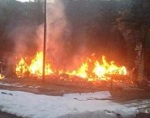
LAPDby Mike Adams, the Health Ranger (NaturalNews) The LAPD has pulled a Waco. Barely two hours after ordering the media to remove their helicopters from the area and cut all live feeds, the LAPD managed to set fire to the cabin occupied by Christopher Dorner and burn him alive inside it, according to media reports.

Mission accomplished for the LAPD, an organization that has run its manhunt more like a rampaging street gang than a professional police department. As Natural News has already documented, LAPD officers have engaged in attempted murder of innocent citizens in their freakish frenzy to try to kill Dorner.

Their motive explains why LAPD officers fired tear gas into the cabin where Dorner was staying, knowing it would ignite flammable materials in the home and set the place on fire.

"...tear gas was fired into the house before the fire broke out," reports the Los Angeles CBS affiliate. This is the same sort of tactic that was used to burn down the Branch Davidian community in Waco, Texas in 1993. The Waco raid, we all know by now, was a politically-motivated ATF assault against innocent men, women and children, all conducted for the purpose of increasing the visibility and importance of the ATF by creating a crisis where none existed. Click here to see an informative video on the subject.

Law enforcement knows full well that tear gas rounds often set homes ablaze. In fact, a California fire department issued a report in 2012 that supports precisely that conclusion. As the San Jose Mercury News reported last year:

Police tear gas launched into a Vallejo home in February during a SWAT-team standoff played a role in starting a fire that caused $60,000 in damage and killed two dogs, a fire department report released Monday finds.

The evidence so far

So here's what we know:

1) The LAPD engaged in a wild, frenzied attempt to execute Dorner. This resulted in LAPD officers engaging in the attempted murder of innocent civilians, including one surfer and two women in a pickup truck. (Question: Why are LAPD officers who shot at innocent citizens not being charged with attempted murder?)

2) Once Dorner was holed up in a cabin, the LAPD chose to fire tear gas canisters into the home instead of waiting him out and forcing a surrender after a long standoff.

3) LAPD officers know full well that tear gas canisters can set off fires.

4) Once the fire broke out, Dorner was a dead man. If he fled the fire, he would be shot down by the LAPD. If he stayed in the cabin, he would be burned alive. This is the new brand of "justice" the LAPD is dishing out in 2013.

I'm not condoning the actions of Dorner, who appears to have murdered at least four victims. But if the LAPD is going to abandon its mission of public safety and function as an armed vigilante justice squad, dishing out death sentences to those it believes are guilty -- without a trial or anything resembling due process -- then they might as well throw away all their badges as just call themselves the LA Gang Squad. Because that's how they're acting. They can even have their own gang signs that they flash at each other before running another taxpayer-funded drive-by.

Dorner succeeds where the media has failed

Whether Dorner is really dead at this point or somehow managed to escape the fire (a possibility that has been reported), he has accomplished one astonishing thing that even the media could not achieve: The exposing of the total criminality of the LAPD and its complete abandonment of law.

Even if Dorner is dead, the LAPD still comes out of this looking not only utterly incompetent but -- even worse -- driven by vengeance rather than law. As every citizen reading this can easily recognize, that's a very dangerous attitude for a police force to carry. In this frenzied manhunt, the whole world watched while the LAPD exposed itself as a gang of reckless idiots who openly fire their guns at innocent civilians and who ram citizens' vehicles with their police cars in acts of sheer madness and desperation.

"These lunatics broadsided the side of his truck, spun him around and started shooting at him," said the attorney for one of the victims of the LAPD murder attempts.

The Torrance Police Department, which seems to have abandoned all reason and logic just as the LAPD has done, explained that "Perdue's truck was 'suddenly leaving the area' and seemingly veering into a patrol car when the two vehicles collided at 5:15 a.m." (Source)

So now, pulling out of a driveway or simply starting your car and driving away can be interpreted as "suddenly leaving the area," earning you an attempted vehicular manslaughter maneuver by the local police. How's that for public safety, eh?

Dorner's killings were not random; but the LAPD's attempted murders were!

Consider the actual risk of harm here: Dorner did not engage in RANDOM killings. Want proof? He did not kill his hostages. He let them live because they weren't on his kill list. And yet the LAPD did, indeed, engage in random acts of attempted murder. Morally and ethically speaking, the LAPD was operating in worse violation than Dorner himself. Killing people who have wronged you is evil, but attempting to kill innocent people who have nothing to do with anything is even worse, and that's what the LAPD did.

In fact, if you really look at the situation in retrospect, a typical LA citizen was far more likely to be killed by the LAPD than by Chris Dorner. Dorner was a selective killer while the LAPD attempted to kill people indiscriminately... seemingly at random.

If you weren't on Chris Dorner's kill list, you had nothing to fear from Dorner. But if you were a black man with a bald head, you had everything to fear from the LAPD! And they proved it by opening fire on not just one innocent person, nor two, but THREE innocent citizens who didn't even resemble Dorner (two of the victims were women, the third was a thin white guy).

No wonder the LAPD was so desperately trying to murder Dorner on sight: the man knew too much. He had seen the inside operations of the LAPD, and he recognized what a runaway criminal operation it was.

None of this justifies Dorner's actions, of course. Making a kill list and murdering people is no way to handle things in a civilized country... unless, of course, you're President Barack Obama, in which case you get a bunch of DoJ lawyers to issue a 16-page memo "legalizing" your own private kill list that "authorizes" the murder of American citizens.

That's where Obama and Dorner are a lot alike: They both believe in the use of violence, outside of law, to kill their enemies. Obama uses armed drones while Dorner used a rifle. Both of them are criminals who operate outside the law, and the only reason Dorner isn't a national hero right now is because he didn't have an army of lawyers working at the DoJ who could sanitize his activities by shoveling lawyerspeak manure all over the place.

Dorner also forgot to call his actions "peace." See, if you kill a bunch of Americans without calling it "peace," then you get chased by the police. But if you call it "peace," as Obama does, you win a Nobel Peace Prize. And then the bombs you drop on children in the Middle East are called "peace bombs."

Dorner's mistake in all this was not that he killed people, you see, it's that he didn't get enough voters to back him first. Once you get the voters behind you, you can kill anybody you want, with no legal recourse whatsoever. That's the precedent recently set by the White House, anyway.

Editor's note: I wrote this article before seeing Alex Jones' video on this subject at:
http://www.infowars.com/video-chris-dorner-torched-waco-style/

He and I both came to the same conclusion on this, which I suppose is not that astonishing, considering the history of police action in America. But what really is astonishing is that Alex Jones totally predicted, on the record, that the police would burn Dorner by setting fire to the cabin. Once again, Jones was 100% correct!

For the record, I typically hear Alex's broadcast 1-3 days after it airs. I don't listen to it in real time because I'm running Natural News during the day, so I listen to InfoWars via the downloadable MP3 files at other times, usually when I'm doing farm work. The Alex Jones Show is perfect for listening when you're on a John Deere tractor, shredding 75 acres to get ready for the spring hay season. You should try it sometime…

WHITE HOUSE: Executive Order -- Improving Critical Infrastructure Cybersecurity

http://profile.ak.fbcdn.net/hprofile-ak-ash3/s160x160/576104_10150806578329238_914319184_a.jpg

The White House
Office of the Press Secretary

Executive Order -- Improving Critical Infrastructure Cybersecurity


EXECUTIVE ORDER

- - - - - - -

IMPROVING CRITICAL INFRASTRUCTURE CYBERSECURITY


By the authority vested in me as President by the Constitution and the laws of the United States of America, it is hereby ordered as follows:

Section 1. Policy. Repeated cyber intrusions into critical infrastructure demonstrate the need for improved cybersecurity. The cyber threat to critical infrastructure continues to grow and represents one of the most serious national security challenges we must confront. The national and economic security of the United States depends on the reliable functioning of the Nation's critical infrastructure in the face of such threats. It is the policy of the United States to enhance the security and resilience of the Nation's critical infrastructure and to maintain a cyber environment that encourages efficiency, innovation, and economic prosperity while promoting safety, security, business confidentiality, privacy, and civil liberties. We can achieve these goals through a partnership with the owners and operators of critical infrastructure to improve cybersecurity information sharing and collaboratively develop and implement risk-based standards.

Sec. 2. Critical Infrastructure. As used in this order, the term critical infrastructure means systems and assets, whether physical or virtual, so vital to the United States that the incapacity or destruction of such systems and assets would have a debilitating impact on security, national economic security, national public health or safety, or any combination of those matters.

Sec. 3. Policy Coordination. Policy coordination, guidance, dispute resolution, and periodic in-progress reviews for the functions and programs described and assigned herein shall be provided through the interagency process established in Presidential Policy Directive-1 of February 13, 2009 (Organization of the National Security Council System), or any successor.

Sec. 4. Cybersecurity Information Sharing. (a) It is the policy of the United States Government to increase the volume, timeliness, and quality of cyber threat information shared with U.S. private sector entities so that these entities may better protect and defend themselves against cyber threats.

Within 120 days of the date of this order, the Attorney General, the Secretary of Homeland Security (the "Secretary"), and the Director of National Intelligence shall each issue instructions consistent with their authorities and with the requirements of section 12(c) of this order to ensure the timely production of unclassified reports of cyber threats to the U.S. homeland that identify a specific targeted entity. The instructions shall address the need to protect intelligence and law enforcement sources, methods, operations, and investigations.

(b) The Secretary and the Attorney General, in coordination with the Director of National Intelligence, shall establish a process that rapidly disseminates the reports produced pursuant to section 4(a) of this order to the targeted entity. Such process shall also, consistent with the need to protect national security information, include the dissemination of classified reports to critical infrastructure entities authorized to receive them. The Secretary and the Attorney General, in coordination with the Director of National Intelligence, shall establish a system for tracking the production, dissemination, and disposition of these reports.

(c) To assist the owners and operators of critical infrastructure in protecting their systems from unauthorized access, exploitation, or harm, the Secretary, consistent with 6 U.S.C. 143 and in collaboration with the Secretary of Defense, shall, within 120 days of the date of this order, establish procedures to expand the Enhanced Cybersecurity Services program to all critical infrastructure sectors. This voluntary information sharing program will provide classified cyber threat and technical information from the Government to eligible critical infrastructure companies or commercial service providers that offer security services to critical infrastructure.

(d) The Secretary, as the Executive Agent for the Classified National Security Information Program created under Executive Order 13549 of August 18, 2010 (Classified National Security Information Program for State, Local, Tribal, and Private Sector Entities), shall expedite the processing of security clearances to appropriate personnel employed by critical infrastructure owners and operators, prioritizing the critical infrastructure identified in section 9 of this order.

(e) In order to maximize the utility of cyber threat information sharing with the private sector, the Secretary shall expand the use of programs that bring private sector subject-matter experts into Federal service on a temporary basis. These subject matter experts should provide advice regarding the content, structure, and types of information most useful to critical infrastructure owners and operators in reducing and mitigating cyber risks.

Sec. 5. Privacy and Civil Liberties Protections. (a) Agencies shall coordinate their activities under this order with their senior agency officials for privacy and civil liberties and ensure that privacy and civil liberties protections are incorporated into such activities. Such protections shall be based upon the Fair Information Practice Principles and other privacy and civil liberties policies, principles, and frameworks as they apply to each agency's activities.

(b) The Chief Privacy Officer and the Officer for Civil Rights and Civil Liberties of the Department of Homeland Security (DHS) shall assess the privacy and civil liberties risks of the functions and programs undertaken by DHS as called for in this order and shall recommend to the Secretary ways to minimize or mitigate such risks, in a publicly available report, to be released within 1 year of the date of this order. Senior agency privacy and civil liberties officials for other agencies engaged in activities under this order shall conduct assessments of their agency activities and provide those assessments to DHS for consideration and inclusion in the report. The report shall be reviewed on an annual basis and revised as necessary. The report may contain a classified annex if necessary.

Assessments shall include evaluation of activities against the Fair Information Practice Principles and other applicable privacy and civil liberties policies, principles, and frameworks. Agencies shall consider the assessments and recommendations of the report in implementing privacy and civil liberties protections for agency activities.

(c) In producing the report required under subsection (b) of this section, the Chief Privacy Officer and the Officer for Civil Rights and Civil Liberties of DHS shall consult with the Privacy and Civil Liberties Oversight Board and coordinate with the Office of Management and Budget (OMB).

(d) Information submitted voluntarily in accordance with 6 U.S.C. 133 by private entities under this order shall be protected from disclosure to the fullest extent permitted by law.

Sec. 6. Consultative Process. The Secretary shall establish a consultative process to coordinate improvements to the cybersecurity of critical infrastructure. As part of the consultative process, the Secretary shall engage and consider the advice, on matters set forth in this order, of the Critical Infrastructure Partnership Advisory Council; Sector Coordinating Councils; critical infrastructure owners and operators; Sector-Specific Agencies; other relevant agencies; independent regulatory agencies; State, local, territorial, and tribal governments; universities; and outside experts.

Sec. 7. Baseline Framework to Reduce Cyber Risk to Critical Infrastructure. (a) The Secretary of Commerce shall direct the Director of the National Institute of Standards and Technology (the "Director") to lead the development of a framework to reduce cyber risks to critical infrastructure (the "Cybersecurity Framework"). The Cybersecurity Framework shall include a set of standards, methodologies, procedures, and processes that align policy, business, and technological approaches to address cyber risks. The Cybersecurity Framework shall incorporate voluntary consensus standards and industry best practices to the fullest extent possible. The Cybersecurity Framework shall be consistent with voluntary international standards when such international standards will advance the objectives of this order, and shall meet the requirements of the National Institute of Standards and Technology Act, as amended (15 U.S.C. 271 et seq.), the National Technology Transfer and Advancement Act of 1995 (Public Law 104-113), and OMB Circular A-119, as revised.

(b) The Cybersecurity Framework shall provide a prioritized, flexible, repeatable, performance-based, and cost-effective approach, including information security measures and controls, to help owners and operators of critical infrastructure identify, assess, and manage cyber risk. The Cybersecurity Framework shall focus on identifying cross-sector security standards and guidelines applicable to critical infrastructure. The Cybersecurity Framework will also identify areas for improvement that should be addressed through future collaboration with particular sectors and standards-developing organizations. To enable technical innovation and account for organizational differences, the Cybersecurity Framework will provide guidance that is technology neutral and that enables critical infrastructure sectors to benefit from a competitive market for products and services that meet the standards, methodologies, procedures, and processes developed to address cyber risks.

The Cybersecurity Framework shall include guidance for measuring the performance of an entity in implementing the Cybersecurity Framework.

(c) The Cybersecurity Framework shall include methodologies to identify and mitigate impacts of the Cybersecurity Framework and associated information security measures or controls on business confidentiality, and to protect individual privacy and civil liberties.

(d) In developing the Cybersecurity Framework, the Director shall engage in an open public review and comment process. The Director shall also consult with the Secretary, the National Security Agency, Sector-Specific Agencies and other interested agencies including OMB, owners and operators of critical infrastructure, and other stakeholders through the consultative process established in section 6 of this order. The Secretary, the Director of National Intelligence, and the heads of other relevant agencies shall provide threat and vulnerability information and technical expertise to inform the development of the Cybersecurity Framework. The Secretary shall provide performance goals for the Cybersecurity Framework informed by work under section 9 of this order.

(e) Within 240 days of the date of this order, the Director shall publish a preliminary version of the Cybersecurity Framework (the "preliminary Framework"). Within 1 year of the date of this order, and after coordination with the Secretary to ensure suitability under section 8 of this order, the Director shall publish a final version of the Cybersecurity Framework (the "final Framework").

(f) Consistent with statutory responsibilities, the Director will ensure the Cybersecurity Framework and related guidance is reviewed and updated as necessary, taking into consideration technological changes, changes in cyber risks, operational feedback from owners and operators of critical infrastructure, experience from the implementation of section 8 of this order, and any other relevant factors.

Sec. 8. Voluntary Critical Infrastructure Cybersecurity Program. (a) The Secretary, in coordination with Sector-Specific Agencies, shall establish a voluntary program to support the adoption of the Cybersecurity Framework by owners and operators of critical infrastructure and any other interested entities (the "Program").

(b) Sector-Specific Agencies, in consultation with the Secretary and other interested agencies, shall coordinate with the Sector Coordinating Councils to review the Cybersecurity Framework and, if necessary, develop implementation guidance or supplemental materials to address sector-specific risks and operating environments.

(c) Sector-Specific Agencies shall report annually to the President, through the Secretary, on the extent to which owners and operators notified under section 9 of this order are participating in the Program.

(d) The Secretary shall coordinate establishment of a set of incentives designed to promote participation in the Program. Within 120 days of the date of this order, the Secretary and the Secretaries of the Treasury and Commerce each shall make recommendations separately to the President, through the Assistant to the President for Homeland Security and Counterterrorism and the Assistant to the President for Economic Affairs, that shall include analysis of the benefits and relative effectiveness of such incentives, and whether the incentives would require legislation or can be provided under existing law and authorities to participants in the Program.

(e) Within 120 days of the date of this order, the Secretary of Defense and the Administrator of General Services, in consultation with the Secretary and the Federal Acquisition Regulatory Council, shall make recommendations to the President, through the Assistant to the President for Homeland Security and Counterterrorism and the Assistant to the President for Economic Affairs, on the feasibility, security benefits, and relative merits of incorporating security standards into acquisition planning and contract administration. The report shall address what steps can be taken to harmonize and make consistent existing procurement requirements related to cybersecurity.

Sec. 9. Identification of Critical Infrastructure at Greatest Risk. (a) Within 150 days of the date of this order, the Secretary shall use a risk-based approach to identify critical infrastructure where a cybersecurity incident could reasonably result in catastrophic regional or national effects on public health or safety, economic security, or national security. In identifying critical infrastructure for this purpose, the Secretary shall use the consultative process established in section 6 of this order and draw upon the expertise of Sector-Specific Agencies. The Secretary shall apply consistent, objective criteria in identifying such critical infrastructure. The Secretary shall not identify any commercial information technology products or consumer information technology services under this section.

The Secretary shall review and update the list of identified critical infrastructure under this section on an annual basis, and provide such list to the President, through the Assistant to the President for Homeland Security and Counterterrorism and the Assistant to the President for Economic Affairs.

(b) Heads of Sector-Specific Agencies and other relevant agencies shall provide the Secretary with information necessary to carry out the responsibilities under this section. The Secretary shall develop a process for other relevant stakeholders to submit information to assist in making the identifications required in subsection (a) of this section.

(c) The Secretary, in coordination with Sector-Specific Agencies, shall confidentially notify owners and operators of critical infrastructure identified under subsection (a) of this section that they have been so identified, and ensure identified owners and operators are provided the basis for the determination. The Secretary shall establish a process through which owners and operators of critical infrastructure may submit relevant information and request reconsideration of identifications under subsection (a) of this section.

Sec. 10. Adoption of Framework. (a) Agencies with responsibility for regulating the security of critical infrastructure shall engage in a consultative process with DHS, OMB, and the National Security Staff to review the preliminary Cybersecurity Framework and determine if current cybersecurity regulatory requirements are sufficient given current and projected risks. In making such determination, these agencies shall consider the identification of critical infrastructure required under section 9 of this order. Within 90 days of the publication of the preliminary Framework, these agencies shall submit a report to the President, through the Assistant to the President for Homeland Security and Counterterrorism, the Director of OMB, and the Assistant to the President for Economic Affairs, that states whether or not the agency has clear authority to establish requirements based upon the Cybersecurity Framework to sufficiently address current and projected cyber risks to critical infrastructure, the existing authorities identified, and any additional authority required.

(b) If current regulatory requirements are deemed to be insufficient, within 90 days of publication of the final Framework, agencies identified in subsection (a) of this section shall propose prioritized, risk-based, efficient, and coordinated actions, consistent with Executive Order 12866 of September 30, 1993 (Regulatory Planning and Review), Executive Order 13563 of January 18, 2011 (Improving Regulation and Regulatory Review), and Executive Order 13609 of May 1, 2012 (Promoting International Regulatory Cooperation), to mitigate cyber risk.

(c) Within 2 years after publication of the final Framework, consistent with Executive Order 13563 and Executive Order 13610 of May 10, 2012 (Identifying and Reducing Regulatory Burdens), agencies identified in subsection (a) of this section shall, in consultation with owners and operators of critical infrastructure, report to OMB on any critical infrastructure subject to ineffective, conflicting, or excessively burdensome cybersecurity requirements. This report shall describe efforts made by agencies, and make recommendations for further actions, to minimize or eliminate such requirements.

(d) The Secretary shall coordinate the provision of technical assistance to agencies identified in subsection (a) of this section on the development of their cybersecurity workforce and programs.

(e) Independent regulatory agencies with responsibility for regulating the security of critical infrastructure are encouraged to engage in a consultative process with the Secretary, relevant Sector-Specific Agencies, and other affected parties to consider prioritized actions to mitigate cyber risks for critical infrastructure consistent with their authorities.

Sec. 11. Definitions. (a) "Agency" means any authority of the United States that is an "agency" under 44 U.S.C. 3502(1), other than those considered to be independent regulatory agencies, as defined in 44 U.S.C. 3502(5).

(b) "Critical Infrastructure Partnership Advisory Council" means the council established by DHS under 6 U.S.C. 451 to facilitate effective interaction and coordination of critical infrastructure protection activities among the Federal Government; the private sector; and State, local, territorial, and tribal governments.

(c) "Fair Information Practice Principles" means the eight principles set forth in Appendix A of the National Strategy for Trusted Identities in Cyberspace.

(d) "Independent regulatory agency" has the meaning given the term in 44 U.S.C. 3502(5).

(e) "Sector Coordinating Council" means a private sector coordinating council composed of representatives of owners and operators within a particular sector of critical infrastructure established by the National Infrastructure Protection Plan or any successor.

(f) "Sector-Specific Agency" has the meaning given the term in Presidential Policy Directive-21 of February 12, 2013 (Critical Infrastructure Security and Resilience), or any successor.

Sec. 12. General Provisions. (a) This order shall be implemented consistent with applicable law and subject to the availability of appropriations. Nothing in this order shall be construed to provide an agency with authority for regulating the security of critical infrastructure in addition to or to a greater extent than the authority the agency has under existing law. Nothing in this order shall be construed to alter or limit any authority or responsibility of an agency under existing law.

(b) Nothing in this order shall be construed to impair or otherwise affect the functions of the Director of OMB relating to budgetary, administrative, or legislative proposals.

(c) All actions taken pursuant to this order shall be consistent with requirements and authorities to protect intelligence and law enforcement sources and methods. Nothing in this order shall be interpreted to supersede measures established under authority of law to protect the security and integrity of specific activities and associations that are in direct support of intelligence and law enforcement operations.

(d) This order shall be implemented consistent with U.S. international obligations.

(e) This order is not intended to, and does not, create any right or benefit, substantive or procedural, enforceable at law or in equity by any party against the United States, its departments, agencies, or entities, its officers, employees, or agents, or any other person.

BARACK OBAMA

Ron Paul Reacts to State of the Union Address - Fox Business 2/12/2013

Audio Proof Cops Burned Down House Chris Dorner Was In - Official Story ...

Rand Paul Gives The Tea Party Response To The President's State of the Union Address - 2/12/2013

Pope Resigned to Avoid Arrest and Seizure


Last year, the Vatican Church had been exposed not only as the main Headquarter for Phaedophiliacs but the godfather of all high-profiled money laundering activities. This is the reason why no sensible banks want to deal with it anymore, hence the preference for cash instead of plastics in all economic activities within the Unholy City.

The pope’s shocking resignation is said to be due to his being tired which is uncommon to infallible gods like him. But for those who have been following the ongoing covert yet global financial war, there should be more to it than meets the eye.

Ben Fulford’s latest update only talks about Bush and Blair as having outed the pope for his being the mastermind of both 911 and 311 attacks. What we have been waiting is the International Tribunal into Crimes of Church and State’s take on the matter, because this organization had been filing lawsuits against the Crown and the Church since last year.

Today, ITCCS release this report from their website:

pope resigned by itccs

Diplomatic Note was issued to Vatican just prior to his resignation
New Pope and Catholic clergy face indictment and arrest as “Easter Reclamation” plan continues

A Global Media Release and Statement from The International Tribunal into Crimes of Church and State

Brussels:

The historically unprecedented resignation of Joseph Ratzinger as Pope this week was compelled by an upcoming action by a European government to issue an arrest warrant against Ratzinger and a public lien against Vatican property and assets by Easter.

The ITCCS Central Office in Brussels is compelled by Pope Benedict’s sudden abdication to disclose the following details:

1. On Friday, February 1, 2013, on the basis of evidence supplied by our affiliated Common Law Court of Justice (itccs.org), our Office concluded an agreement with representatives of a European nation and its courts to secure an arrest warrant against Joseph Ratzinger, aka Pope Benedict, for crimes against humanity and ordering a criminal conspiracy.

2. This arrest warrant was to be delivered to the office of the “Holy See” in Rome on Friday, February 15, 2013. It allowed the nation in question to detain Ratzinger as a suspect in a crime if he entered its sovereign territory.

3. A diplomatic note was issued by the said nation’s government to the Vatican’s Secretary of State, Cardinal Tarcisio Bertone, on Monday, February 4, 2013, informing Bertone of the impending arrest warrant and inviting his office to comply. No reply to this note was received from Cardinal Bertone or his office; but six days later, Pope Benedict resigned.

4. The agreement between our Tribunal and the said nation included a second provision to issue a commercial lien through that nation’s courts against the property and wealth of the Roman Catholic church commencing on Easter Sunday, March 31, 2013. This lien was to be accompanied by a public and global “Easter Reclamation Campaign” whereby Catholic church property was to be occupied and claimed by citizens as public assets forfeited under international law and the Rome Statute of the International Criminal Court.

5. It is the decision of our Tribunal and the said nation’s government to proceed with the arrest of Joseph Ratzinger upon his vacating the office of the Roman Pontiff on a charge of crimes against humanity and criminal conspiracy.

6. It is our further decision to proceed as well with the indictment and arrest of Joseph Ratzinger’s successor as Pope on the same charges; and to enforce the commercial lien and “Easter Reclamation Campaign” against the Roman Catholic church, as planned.

In closing, our Tribunal acknowledges that Pope Benedict’s complicity in criminal activities of the Vatican Bank (IOR) was compelling his eventual dismissal by the highest officials of the Vatican. But according to our sources, Secretary of State Tarcisio Bertone forced Joseph Ratzinger’s resignation immediately, and in direct response to the diplomatic note concerning the arrest warrant that was issued to him by the said nation’s government on February 4, 2013.

We call upon all citizens and governments to assist our efforts to legally and directly disestablish the Vatican, Inc. and arrest its chief officers and clergy who are complicit in crimes against humanity and the ongoing criminal conspiracy to aid and protect child torture and trafficking.

Further bulletins on the events of the Easter Reclamation Campaign will be issued by our Office this week.

Issued 13 February, 2013
12:00 am GMT
by the Brussels Central Office

Source »

Statements #5 and #6 should be fully supported by everyone to send a clear message that we don’t condone all forms of sadistic behavior within and without the premises of any institution, especially in that hallowed grounds of the Usurpers of the Divine.

The closing statement also indicates that the men behind the most effective, most elaborate mind control device ever created, are panicking, they want Ratzinger out of the fold even at the eleventh hour as part of “damage control” measures.

However things would actually turn out depends largely on our level of participation.

_

We are fully indebted to the following who gave their support for the month of February 2013:

Corneliu R, $100

Noel T, $50

Rebecca R, $20

Thank you very much. We greatly appreciate it.

One of the significant sources of funds for the Cabal is the healthcare industry which registered a whopping $2.7 trillion in 2011, and is projected to soar to $3.6 trillion in 2016, in the US alone. We believe that this is just a conservative figure.

You can join the fight against the Dark Cabal and accelerate its demise just by boycotting Big Pharma. You can effectively do this by downloading “Towards Healthcare Emancipation“, a fully illustrated do-it-yourself instructional eBook that will help you in implementing all eClinik methods that would negate the use of expensive medicine, avoid radioactive diagnostics and treatments in completely defeating cancer, AIDS and all other parasitic diseases. These methods, when faithfully followed, work 100% all the time. Find out more about this here.

http://eclinik.wordpress.com/2013/02/13/pope-resigned-to-avoid-arrest-and-seizure/

Homosexual Lobby is so close to claiming absolute victory over the Boy Scouts of America

Public Advocate Banner

The Homosexual Lobby is so close to claiming absolute victory over the Boy Scouts of America (BSA).

For weeks now rumors have circulated that the Boy Scouts national council is going to cave into the demands of the Homosexual Agenda.

This would mean that practicing homosexuals would be allowed to serve as leaders over young boys in the organization.

Public Advocate led the fight last summer in defending the Boy Scouts' support of morality.

But since then, major corporate donors have pulled their funding from the Boy Scouts.

The national council seemed ready to cave to this pressure last week and reverse the very popular morality in leadership policy.

However a backlash of public outrage has forced them to delay this decision until May.

But you can be sure the Homosexual Lobby is not going to relent for a second in the pressure they are applying to the Boy Scouts.

They are determined to corrupt this historic and honored organization.

My friend, it is never enough for the radical liberal agenda.

No sooner than the rumor got out that the Boy Scouts would embrace radical homosexuality, the atheists started crying out that the Boy Scouts needed to completely delete God from their program.

They will never be happy until they have completely destroyed American morality.

Please call the BSA headquarters at 972-580-2000 and urge them to remain steadfast in their stand for morality.

The BSA leadership could simply ignore the wishes of thousands of America families.

You and I cannot leave these families undefended.

For the Family,


Eugene Delgaudio
President, Public Advocate of the United States