ARTICLES - HOT OFF THE FAGGOT

Amazon Disarms Brits By Banning Self-Defense Items

Amplify’d from www.prisonplanet.com

Media, police and politicians disparage communities protecting themselves as “vigilantism”

Paul Joseph Watson
Prison Planet.com
Amazon Disarms Brits By Banning Self Defense Items alg tottenham riots

Following calls by politicians, media and the police for Brits not to buy baseball bats and engage in what was disparagingly termed “vigilantism,” Amazon UK has followed suit by banning self-defense items from its online store, after sales of makeshift weapons soared through the roof as a result of riots plaguing the country.

In the immediate aftermath of widespread looting and rioting which was directed primarily against private homes and local family businesses, Brits left defenseless by a blanket gun ban that makes it virtually impossible to own a private firearm rushed to Amazon to purchase whatever could be used as a weapon to protect their families and property from attack.

The need for self-defense was exacerbated after police in London were ordered to stand down and let the rioting take place for the first three nights of chaos as a result of a Scotland Yard directive.

Sales of aluminum truncheons and baseball bats skyrocketed, with some items achieving sales 50,000 per cent above normal.

However, despite the fact that communities organizing themselves into groups to protect their streets, undermined by being labeled “vigilantes” by the media, did indeed serve to quell the worst of the rioting, politicians like Stella Creasy, MP for Walthamstow which was hit by riots on Monday night, lambasted members of the public for purchasing weapons to defend themselves.

“This crosses the line when it involves weapons,” said Creasy. “That just encourages the sense of fear – we want to reduce tension and fear in the area. People with baseball bats roaming the streets is not helpful: don’t go on Amazon buying them.”

Following suit, Amazon UK today banned the sale of perfectly legal items, including self-defense sprays and Kubotans, short lengths of plastic or steel.

“Amazon has removed several police-style telescopic truncheons from sale on its site as soaring sales of truncheons, baseball bats and other items that could be used as weapons sparked fears of vigilantism in the wake of widespread rioting,” reports the Guardian.

Amazon users were divided about the decision, but many applauded the move despite the fact that police completely failed to protect countless businesses from being burned to the ground and did little to stop violence which led to people being killed.

“Even if they are being bought by respectable home and business owners, they should be banned from sale temporarily,” said V Woolf. “Vigilantism is not the answer. Get these items off the shelves, we are all scared and angry in London and need to know that measures are being taken to help us to feel safe in our cities again.”

But there’s a difference between ‘feeling safe’ and actually being safe in your own home. No amount of government legislation or police deterrence can provide true safety and security, that responsibility rests with the individual. This has been proven in triplicate over the past few nights. As soon as communities started banding together and patrolling their streets, the riots withered and last night there was virtually no trouble at all.

However, the media quickly disparaged people getting together with their neighbors to protect their communities as “vigilantism”. The Metropolitan Police, whose order to its officers to stand down on the first three nights of rioting directly led to the escalation of the chaos, also warned residents not to patrol their communities.

Just like gun control, banning baseball bats only disarms the public and creates victims. Criminals will always be able to acquire weapons of any description because they do not obey laws. Leaving Brits defenseless will only embolden the rioting hordes.

If the UK riots have proven nothing else, they’ve proven that the authorities cannot and will not protect you. It always comes down to the responsibility of the individual and the community to protect their own families, businesses and private property.

Paul Joseph Watson is the editor and writer for Prison Planet.com. He is the author of Order Out Of Chaos. Watson is also a regular fill-in host for The Alex Jones Show.

Read more at www.prisonplanet.com
 

Episode 375 Steve Quayle - Worldwide Chaos 08/10 by Omega Man | Blog Talk Radio

Episode 375 Steve Quayle - Worldwide Chaos 08/10 by Omega Man | Blog Talk Radio

Rising Restrictions on Religion

Amplify’d from pewforum.org

Rising Restrictions on Religion

One-third of the world's population experiences an increase

restrictII-large

Executive Summary

Navigate this page:

Restrictions on
religious beliefs and practices rose between mid-2006 and mid-2009 in 23 of the
world’s 198 countries (12%), decreased in 12 countries (6%) and remained
essentially unchanged in 163 countries (82%), according to a new study by the
Pew Research Center’s Forum on Religion & Public Life.

Changes in Global Restrictions on ReligionBecause several
countries with increasing restrictions on religion are very populous, however,
the increases affected a much larger share of people than of states. More than
2.2 billion people – nearly a third (32%) of the world’s total population of
6.9 billion – live in countries where either government restrictions on
religion or social hostilities involving religion rose substantially over the
three-year period studied. Only about 1% of the world’s population lives in
countries where government restrictions or social hostilities declined.

Among the world’s
25 most populous countries – which account for about 75% of the world’s total
population – restrictions on religion substantially increased in eight
countries and did not substantially decrease in any. In China, Nigeria, Russia,
Thailand, the United Kingdom and Vietnam, the increases were due primarily to
rising levels of social hostilities involving religion. In Egypt and France,
the increases were mainly the result of government restrictions. The rest of
the 25 most populous countries, including the United States, did not experience
substantial changes in either social hostilities or government-imposed
restrictions.

This is the second
time the Pew Forum has measured restrictions on religion around the globe. Like
the baseline report, the new study scores 198 countries and territories on two
indexes:


  • The Government Restrictions Index measures government laws, policies and
    actions that restrict religious beliefs or practices. This includes efforts by
    governments to ban particular faiths, prohibit conversions, limit preaching or
    give preferential treatment to one or more religious groups.
  • The Social Hostilities Index measures acts of religious hostility by
    private individuals, organizations and social groups. This includes mob or
    sectarian violence, harassment over attire for religious reasons and other
    religion-related intimidation or abuse.

Among the five geographic regions covered in the study,
the Middle East-North Africa region had the largest proportion of countries in
which government restrictions on religion increased, with nearly a third of the
region’s countries (30%) imposing greater restrictions. Egypt, in particular,
ranked very high (in the top 5% of all countries, as of mid-2009) on both government
restrictions and social hostilities involving religion. Egypt was one of just
two countries in the world – Indonesia was the other – that had very high
scores on both measures as of mid-2009.

Europe had the largest proportion of countries in which social
hostilities related to religion were on the rise from mid-2006 to mid-2009.
Indeed, five of the 10 countries in the world that had a substantial increase
in social hostilities were in Europe: Bulgaria, Denmark, Russia, Sweden and the
United Kingdom. The study also finds that social hostilities involving religion
have been rising in Asia, particularly in China, Thailand and Vietnam.

Countries Where Government Restrictions Rose, Ranked by Total PopulationCountries where government restrictions declined, ranked by total population
 

Overall, 14 countries had a substantial increase in government
restrictions on religion, while eight had a substantial decline. In terms of
social hostilities involving religion, 10 countries had a substantial increase,
while five had a substantial decline. No country rose or declined substantially
in both categories over the three-year period. Just one country, Kyrgyzstan,
showed a substantial increase in one category (government restrictions) along
with a decrease in the other category (social hostilities); consequently, it is
treated as having no overall change.


Changes in Restrictions Among the 25 Most Populous Countries


Among the world’s most populous countries, government restrictions or social hostilities substantially increased in eight countries – China, Egypt, France, Nigeria, Russia, Thailand, Vietnam and the United Kingdom – and did not substantially decrease in any. Countries in the upper right have the most restrictions and hostilities. Countries in the lower left have the least. The countries with substantial increases in restrictions are labeled in bold below.


In general, most of the countries that had substantial increases in
government restrictions or social hostilities involving religion already had
high or very high levels of restrictions or hostilities. By contrast, nearly
half of the countries that had substantial decreases in restrictions or
hostilities already scored low. This suggests that there may be a gradual
polarization taking place in which countries that are relatively high in
religious restrictions are getting higher while those that are relatively low
are getting lower.

Countries where social hostilities rose, ranked by total populationCountries where social hostilities declined, ranked by total population
 

Specifically, among the 62 countries with high or very
high scores on either or both indexes as of mid-2008, restrictions or
hostilities increased substantially in 14 countries (23%) and decreased
substantially in five (8%). Among the 42 countries that started out with
moderate scores on either or both indexes, increases occurred in seven
countries (17%) and decreases in two (5%). In contrast, among the 94 countries
that started out with low scores on both indexes, the level of government
restrictions and/or social hostilities involving religion decreased in five
countries (5%) and increased in two (2%).

During the three-year period covered by the study, the extent of
violence and abuse related to religion increased in more places than it
decreased. The number of countries in which governments used at least some
measure of force against religious groups or individuals rose from 91 (46%) in
the period ending in mid-2008 to 101 (51%) in the period ending in mid-2009.
This violence was wide-ranging, including individuals being killed, physically
abused, imprisoned, detained or displaced from their homes, as well as damage
to or destruction of personal or religious properties.

In nearly three-quarters of all countries, private citizens or groups
committed crimes, malicious acts or violence motivated by religious hatred or
bias. Such acts occurred in 142 countries (72%) in the period ending in
mid-2009, about the same as in the previous reporting period.  The number of countries that experienced mob
violence related to religion rose from 38 (19%) as of mid-2008 to 52 (26%) as
of mid-2009.

Countries with high restrictions or hostilities are getting higher

Harassment and Anti-Blasphemy Laws 

Number of countries where religious groups were harassedAdherents
of the world’s two largest religious groups, Christians and Muslims, who
together comprise more than half of the global population, were harassed in the
largest number of countries.1 Over the three-year period studied, incidents of
either government or social harassment were reported against Christians in 130
countries (66%) and against Muslims in 117 countries (59%). Buddhists and
Hindus – who together account for roughly one-fifth of the world’s population
and who are more geographically concentrated than Christians or Muslims – faced
harassment in fewer places; harassment was reported against Buddhists in 16
countries (8%) and against Hindus in 27 countries (14%).

In
proportion to their numbers, some smaller religious groups faced especially
widespread harassment. Although Jews comprise less than 1% of the world’s
population, government or social harassment of Jews was reported in 75
countries (38%). Incidents of harassment involving members of other world
religions – including Sikhs, ancient faiths such as Zoroastrianism, newer faith
groups such as Baha’is and Rastafarians, and localized groups that practice
tribal or folk religions – were reported in 84 countries (42%). (For more
details, see Harassment of Particular Religious Groups .)

In addition, the study finds that restrictions on religion are
particularly common in countries that prohibit blasphemy, apostasy or
defamation of religion. While such laws are sometimes promoted as a way to
protect religion, in practice they often serve to punish religious minorities
whose beliefs are deemed unorthodox or heretical. (For more details, see Laws Against Blasphemy, Apostasy and Defamation of Religion.)

About the
Report
 

These
are among the key findings of Rising Restrictions on Religion, the Pew Forum’s second report on global restrictions
on religion. The 198 countries and self-administering territories covered by
the study contain more than 99.5% of the world’s population. Each country was
scored on a total of 33 measures phrased as questions about government
restrictions or social hostilities involving religion. (For the full question
wording, see the Summary of Results.) The Government Restrictions Index is comprised of 20 questions; there are 13
questions on the Social Hostilities Index.

Time periods covered in the reportTo
answer the questions that make up the indexes, Pew Forum researchers combed
through 18 widely cited, publicly available sources of information, including
reports by the U.S. State Department, the U.S. Commission on International
Religious Freedom, the U.N. Special Rapporteur on Freedom of Religion or
Belief, the Council of the European Union, the United Kingdom’s Foreign &
Commonwealth Office, Human Rights Watch, the International Crisis Group, the Hudson
Institute, Freedom House and Amnesty International. (For the complete list of
sources, see the Methodology.) Many of the examples cited in this
report were drawn from the State Department’s annual International Religious
Freedom reports.

The researchers involved in this process recorded only
concrete reports about specific government laws, policies and actions, as well
as incidents of religious violence or intolerance by social groups; they did
not rely on the commentaries or opinions of the sources. (For a more detailed
explanation of the coding and data verification procedures, see the
Methodology.) The goal was to devise a battery of quantifiable, objective
measures that could be analyzed individually as well as combined into two
comprehensive indexes, the Government Restrictions Index and the Social
Hostilities Index.

The
Forum’s baseline report on global restrictions on religion calculated each
country’s average scores on the Government Restrictions Index and Social
Hostilities Index for the two-year period from mid-2006 to mid-2008. This
report assesses changes over time by comparing each country’s original scores
with its average scores for the overlapping two-year period from mid-2007 to
mid-2009.2 Comparing rolling averages for overlapping time
periods reduces the impact of year-to-year fluctuations and helps identify
consistent trends.

This
report focuses on changes in countries’ scores on the indexes that are deemed
to be “substantial.” (The report refers to a change in a country’s score as
substantial only if it is at least 1.5 standard deviations above or below the
mean amount of change among all 198 countries on each index. The change also
had to be in the same direction over the two periods studied, meaning that it
had to rise or fall both in the period from mid-2006 to mid-2008 and in the
overlapping period from mid-2007 to mid-2009. See the Methodology for more
details.)

Situation as of Mid-2009 

Countries with very high government restrictions or social hostilities involving religionThe Pew Forum
characterizes each country’s place on the Government Restrictions Index and the
Social Hostilities Index by percentile. Countries with scores in the top 5% are
characterized as “very high.” The next highest 15% of scores are categorized as
“high,” and the following 20% are characterized as “moderate.” The bottom 60%
of scores are characterized as “low.”

As
of mid-2009, government restrictions on religion were high or very high in 42
countries, about one-in-five worldwide. The 10 countries that had very high
government restrictions as of mid-2009 were Egypt, Iran, Saudi Arabia,
Uzbekistan, China, Maldives, Malaysia, Burma (Myanmar), Eritrea and Indonesia.
Government restrictions were in the moderate range in 39 countries. A much
larger number of countries – 117 – had low levels of government restrictions.
But because many of the more restrictive countries (including China and India)
are very populous, more than half of the world’s population (59%) was living
with high or very high government restrictions as of mid-2009. (For a complete
list of all countries in each category, see the Government Restriction Index table.)

As
of mid-2009, social hostilities involving religion were high or very high in 40
countries, about one-in-five worldwide. The 10 countries that had very high
hostilities as of mid-2009 were Iraq, India, Pakistan, Afghanistan, Somalia,
Indonesia, Nigeria, Bangladesh, Israel and Egypt. Social hostilities were in
the moderate range in 43 countries. A much larger number of countries – 115 –
had low levels of social hostilities. But because many of the countries with
high or very high social hostilities (including India, Indonesia, Pakistan,
Bangladesh and Nigeria) are very populous, nearly half of the world’s
population (48%) was living with high or very high social hostilities involving
religion as of mid-2009. (For a complete list of all countries in each
category, see the Social Hostilities Index table.)

Government
restrictions or social hostilities were high or very high in about one-third of
the countries as of mid-2009. But because some of the most restrictive
countries are very populous, nearly 70 percent of the world’s 6.9 billion
people were living in countries where governments imposed high restrictions on
religion or where there were high levels of religious hostilities in
society. 

Changes in Government Restrictions 

Substantial changed in government restrictionsComparing
the Pew Forum’s first set of scores (for the two-year period from mid-2006 to
mid-2008) with the second set of scores (for the two-year period from mid-2007
to mid-2009), the study finds that 14 countries had a substantial increase in
government restrictions and eight had a substantial decline.

Six
of the 14 countries where government restrictions rose substantially were in
the Middle East-North Africa region: Algeria, Egypt, Libya, Qatar, Syria and
Yemen. In Egypt, for example, the government maintained a longstanding ban on
the Muslim Brotherhood, an influential Islamic organization, and discriminated
against Christians in various ways, including in public-sector hiring. In
Yemen, government officials reportedly sought to intimidate Baha’is and
converts to Christianity, including arresting people for promoting Christianity
and distributing Bibles.

Most
of the countries with substantial decreases in government restrictions (seven
of the eight countries) had low levels of restrictions to begin with. The
exception was Greece, which started out with high government restrictions but
moved to the moderate level by mid-2009. While the government of Greece
continued to restrict proselytizing, for example, there were fewer reported
cases where the police detained people for proselytizing.

Changes in Social Hostilities 

substantial changes in social hostilitiesTen
countries had substantial increases in social hostilities involving religion
and five had a substantial decline.

As
noted above, the level of social hostilities involving religion rose
substantially in five European nations: Bulgaria, Denmark, Russia, Sweden and
the United Kingdom. Much of the tension in Europe focused on the region’s
rapidly growing Muslim population, but in some cases it also reflected rising
anti-Semitism and antagonism toward Christian minorities, such as Jehovah’s
Witnesses.3  

Social
hostilities also rose in several Asian countries, including China, Mongolia,
Thailand and Vietnam. In China, for example, an August 2008 terrorist attack
attributed by Chinese authorities to a militant Muslim separatist group, known
as the East Turkestan Islamic Movement, caused more than a dozen casualties in
Xinjiang Province, and riots in Tibet in March 2008 pitted ethnic Tibetans
(mainly Buddhists) against ethnic Han Chinese. 

Three
of the five countries where social hostilities declined are in sub-Saharan
Africa: Chad, Liberia and Tanzania. But social hostilities involving religion
rose in Nigeria, the region’s most populous country, where there were a number of violent clashes between
Christians and Muslims.

Government Restrictions or Social Hostilities 

Looking at the countries that had a substantial increase
in either government restrictions or social hostilities, most (14 out of 23, or 61%) previously had high or very
high levels of restrictions or hostilities. By contrast, among the countries
that had substantial declines in either government restrictions or social
hostilities, most (seven out of 12, or 58%) previously had low or moderate
levels of restrictions or hostilities. And of the countries that stayed roughly
the same, most (120 out of 163, or 74%) previously had low or moderate levels
of restrictions or hostilities. Once again, this suggests that there may be a
gradual polarization taking place in which restrictions are rising
predominantly in countries that already have high or very high restrictions or
hostilities, and are declining or staying the same predominately in countries
that already have low or moderate restrictions or hostilities.

Change in government restrictions or social hostilities

Other Findings 

Other
key findings from the study include:

  • Among the five
    geographic regions covered in this report, the Middle East-North Africa had the
    highest government and social restrictions on religion, while the Americas were
    the least restrictive region on both measures. The Middle East-North Africa region
    also had the greatest number of countries where government restrictions on
    religion increased from mid-2006 to mid-2009, with about a third of the
    region’s countries (30%) imposing greater restrictions.
    In contrast, no country in the Americas registered a substantial increase on
    either index.
  • Prior
    to the recent uprising in Egypt, government restrictions on religion were
    already very high there. By mid-2009, Egypt also had joined the 5% of countries
    with the most intense social hostilities involving religion. However, the
    increase in social hostilities in Egypt fell just short of being a substantial
    increase, as defined in this study.
  • Government
    restrictions on religion increased substantially in two European countries,
    France and Serbia. In France, members of Parliament began discussing whether
    women should be allowed to wear the burqa, and President Nicolas Sarkozy said
    the head-to-toe covering was “not welcome” in French society. The French
    government also put pressure on religious groups it considers to be cults,
    including Scientologists. For example, the lead prosecutor in a fraud case
    involving the Church of Scientology sought to have the group declared a
    “criminal enterprise.” In Serbia, meanwhile, the government refused to legally
    register Jehovah’s Witnesses and several other minority religious groups. There
    also were reports that some government officials referred to minority religious
    groups as “sects” or other pejorative terms.
  • Government
    restrictions also increased substantially in Malaysia, which, like Egypt,
    already had very high restrictions to begin with. Although the country’s
    constitution recognizes freedom of religion, Malaysia restricts the observance
    of Islamic beliefs and practices that do not conform to Sunni Islam. Indeed,
    the Malaysian government monitors more than 50 Muslim groups that it considers
    unorthodox, including the Ahmadiyya movement.
  • In China,
    there was no change in the level of government restrictions on religion, which
    remained very high. But social hostilities involving religion, which had been
    relatively low, increased substantially from mid-2006 to mid-2009. During that
    time period protests erupted among the predominantly Buddhist population in
    Tibet and among Uighur Muslims in Xinjiang Province over what they saw as
    cultural and economic domination by ethnic Han Chinese.
  • In some other
    Asian countries, social hostilities also involved ethnic and religious
    minorities, such as Malay Muslim separatists in southern Thailand, who were
    involved in several violent clashes with the majority Buddhist population. 
  • Social
    hostilities involving religion in the United States remained at a moderate
    level. In recent years, the U.S. annually has had at least 1,300 hate crimes
    involving religious bias, according to FBI reports. (Most of the recent
    controversies over the construction of mosques and Islamic centers in New York
    City and other communities across the country took place after the period
    covered in this report. )
  • Religion-related terrorist groups
    were active in 74 countries around the world in the period ending in mid-2009.
    The groups carried out acts of violence in half of the 74 countries. (In the
    other half, their activities were limited to recruitment and fundraising.) In
    Russia, for example, more than 1,100 casualties resulted from religion-related
    terrorist attacks during the two-year period ending in mid-2009. This was more
    than double the number of casualties recorded in the previous reporting period.
    This includes people who were killed, wounded, displaced from their homes,
    kidnapped or had their property destroyed in religion-related terrorist
    attacks.

Return to Table of Contents at top to continue reading the Full Report. 


Footnotes: 

1 As of 2010, Muslims made up nearly a
quarter (23.4%) of the world’s population, according to the Pew Forum’s January
2011 report The Future of the Global Muslim Population.
The Pew Forum is currently compiling population data on other world religions
and intends to publish a series of reports on the demography of religion in
2011-2012. In the meantime, the population figures used in this section are
from the World Religion Database at Boston University, which estimates that
Christians comprise about a third (32.9%) of the world’s population. (return to text) 

2 Answers to Questions 1 and 2 in the
Government Restrictions Index were recoded for the period from mid-2006 to
mid-2008 to match the coding conventions used for the period from mid-2007 to
mid-2009. After the recoding, two fewer countries scored in the high or very
high category for the period ending in mid-2008. As a result, this report lists
62 countries as having high or very high restrictions as of mid-2008 rather
than the 64 countries listed in the 2009 baseline report, Global Restrictions on Religion. (return to text) 

3 For background on Europe’s growing
Muslim population, see the Pew Forum’s January 2011 report The Future of the Global Muslim
Population
. (return to text) 


Read more on:
Government


Read more at pewforum.org
 

Religious Harassment on Rise Throughout the World, Report Finds

Amplify’d from www.foxnews.com

Religious Harassment on Rise Throughout the World, Report Finds

| FoxNews.com

Egypt Blast

Jan. 1, 2011: Worshippers shout around an exploded car in front of a Coptic Christian church in the Egyptian city of Alexandria, Egypt.

Worshippers are under attack in more countries as governments crack down on religion, and social hostilities grow, according to a new report.

The report, by the Pew Research Center’s Forum on Religion & Public Life, looked at statistics and government data spanning from 2006 to 2009, and uses such criteria as government crackdowns on religion and social hostility, including religious-motivated bias, beatings and murder, to determine which countries were the least tolerant to religion.

Christians in 130 countries -- 66 percent of the world's countries -- experienced government laws and social harassment. Muslims, according to the Pew report, faced government and social harassment in slightly fewer countries, with incidents reported in 117 countries. Many of those countries overlap with incidents against both religions, suggesting ongoing strife between the two religions, according to the report.

The world’s most geographically concentrated religious groups – Hindus and Buddhists – also experienced discrimination in 27 and 16 countries, respectively.

Religious intolerance is highest in the Middle East and Europe. Although the Middle East is predominantly Muslim, the report said that Muslims were the most harassed religious group, with Christians and Jews also showing a heavy level of harassment.

Egypt showed the biggest increase in both government crackdowns and social hostilities, with the report mentioning that this rise was independent of the recent revolution the country experienced this year. Strife between Muslims and Coptic Christians is an ongoing problem in Egypt, as well as the ability to express religion freely.

France came in second for the biggest rise in harassment, and took criticism for implementing anti-burqa laws last year. Bias against Muslims has also been on the rise there.

“In general, most of the countries that had substantial increases in government restrictions or social hostilities involving religion already had high or very high levels of restrictions or hostilities,” the report said.

The Pew report named Japan the most religiously tolerant of the world’s countries, with the fewest number of government crackdowns and social hostilities. Brazil also proved to be welcoming to religion, coming in a close second.

Read more at www.foxnews.com
 

BREAKING: Post S&P Downgrade, Chicagoans Take to Streets, Demand Arrest of Bankers

Amplify’d from www.youtube.com


BREAKING: Post S&P Downgrade, Chicagoans Take to Streets, Demand Arrest of Bankers


http://RTR.org | Immediately following the announcement of the S&P downgrade, defiant Chicagoans took the the streets and demanded the arrest of the Bankers and an the end of the Federal Reserve system. This was never covered on any news outlet.


See more at www.youtube.com
 

BREAKING: Post S&P Downgrade, Chicagoans Take to Streets, Demand Arrest ...

Bringing the Vatican to Justice

Amplify’d from www.samharris.org

Bringing the Vatican to Justice

image


By Sam Harris

I confess that, as a critic of religion, I have paid too little attention to the sexual abuse scandal in the Catholic Church. Frankly, it always felt unsportsmanlike to shoot so large and languorous a fish in so tiny a barrel. This scandal was one of the most spectacular “own goals” in the history of religion, and there seemed to be no need to deride faith at its most vulnerable and self-abased. Even in retrospect, it is easy to understand the impulse to avert one’s eyes: Just imagine a pious mother and father sending their beloved child to the Church of a Thousand Hands for spiritual instruction, only to have him raped and terrified into silence by threats of hell. And then imagine this occurring to tens of thousands of children in our own time—and to children beyond reckoning for over a thousand years. The spectacle of faith so utterly misplaced, and so fully betrayed, is simply too depressing to think about.

But there was always more to this phenomenon that should have compelled my attention. Consider the ludicrous ideology that made it possible: The Catholic Church has spent two millennia demonizing human sexuality to a degree unmatched by any other institution, declaring the most basic, healthy, mature, and consensual behaviors taboo. Indeed, this organization still opposes the use of contraception, preferring, instead, that the poorest people on earth be blessed with the largest families and the shortest lives. As a consequence of this hallowed and incorrigible stupidity, the Church has condemned generations of decent people to shame and hypocrisy—or to Neolithic fecundity, poverty, and death by AIDS. Add to this inhumanity the artifice of cloistered celibacy, and you now have an institution—one of the wealthiest on earth—that preferentially attracts pederasts, pedophiles, and sexual sadists into its ranks, promotes them to positions of authority, and grants them privileged access to children. Finally, consider that vast numbers of children will be born out of wedlock, and their unwed mothers vilified, wherever Church teaching holds sway—leading boys and girls by the thousands to be abandoned to Church-run orphanages only to be raped and terrorized by the clergy. Here, in this ghoulish machinery set to whirling through the ages by the opposing winds of shame and sadism, we mortals can finally glimpse how strangely perfect are the ways of the Lord.

In 2009, The Irish Commission to Inquire into Child Abuse (CICA) investigated such of these events as occurred on Irish soil. Their report runs to 2,600 pages. Having read only an oppressive fraction of this document, I can say that when thinking about the ecclesiastical abuse of children, it is best not to imagine shades of ancient Athens and the blandishments of a “love that dare not speak its name.” Yes, there have surely been polite pederasts in the priesthood, expressing anguished affection for boys who would turn 18 the next morning. But behind these indiscretions there is a continuum of abuse that terminates in utter evil. The scandal in the Catholic Church—one might now safely say the scandal that is the Catholic Church—includes the systematic rape and torture of orphaned and disabled children. Its victims attest to being whipped with belts and sodomized until bloody—sometimes by multiple attackers—and then whipped again and threatened with death and hell fire if they breathed a word about their abuse. And yes, many of the children who were desperate or courageous enough to report these crimes were accused of lying and returned to their tormentors to be raped and tortured again.

The evidence suggests that the misery of these children was facilitated and concealed by the hierarchy of the Catholic Church at every level, up to and including the prefrontal cortex of the current Pope. In his former capacity as Cardinal Ratzinger, Pope Benedict personally oversaw the Vatican’s response to reports of sexual abuse in the Church. What did this wise and compassionate man do upon learning that his employees were raping children by the thousands?  Did he immediately alert the police and ensure that the victims would be protected from further torments? One still dares to imagine such an effulgence of basic human sanity might have been possible, even within the Church. On the contrary, repeated and increasingly desperate complaints of abuse were set aside, witnesses were pressured into silence, bishops were praised for their defiance of secular authority, and offending priests were relocated only to destroy fresh lives in unsuspecting parishes. It is no exaggeration to say that for decades (if not centuries) the Vatican has met the formal definition of a criminal organization, devoted not to gambling, prostitution, drugs, or any other venial sin, but to the sexual enslavement of children.

Consider the following passages from the CICA report:

7.129 In relation to one School, four witnesses gave detailed accounts of sexual abuse, including rape in all instances, by two or more Brothers and on one occasion along with an older resident. A witness from the second School, from which there were several reports, described being raped by three Brothers: ‘I was brought to the infirmary…they held me over the bed, they were animals….They penetrated me, I was bleeding’. Another witness reported he was abused twice weekly on particular days by two Brothers in the toilets off the dormitory:

One Brother kept watch while the other abused me ...(sexually)... then they changed over. Every time it ended with a severe beating. When I told the priest in Confession, he called me a liar. I never spoke about it again.
I would have to go into his ...(Br X’s)... room every time he wanted. You’d get a hiding if you didn’t, and he’d make me do it ...(masturbate)... to him. One night I didn’t ...(masturbate him)... and there was another Brother there who held me down and they hit me with a hurley and they burst my fingers ...displayed scar….

7.232 Witnesses reported being particularly fearful at night as they listened to residents screaming in cloakrooms, dormitories or in a staff member’s bedroom while they were being abused. Witnesses were conscious that co-residents whom they described as orphans had a particularly difficult time:

The orphan children, they had it bad. I knew ...(who they were)... by the size of them, I’d ask them and they’d say they come from ...named institution…. They were there from an early age. You’d hear the screams from the room where Br ...X… would be abusing them.
There was one night, I wasn’t long there and I seen one of the Brothers on the bed with one of the young boys ... and I heard the young lad screaming crying and Br ...X… said to me “if you don’t mind your own business you’ll get the same”. ... I heard kids screaming and you know they are getting abused and that’s a nightmare in anybody’s mind. You are going to try and break out. ... So there was no way I was going to let that happen to me…. I remember one boy and he was bleeding from the back passage and I made up my mind, there was no way it ...(anal rape)... was going to happen to me. ... That used to play on my mind.


This is the kind of abuse that the Church has practiced and concealed since time out of memory. Even the CICA report declined to name the offending priests due to pressure from the Vatican. The cover-up of these atrocities continues.

I have been awakened from my unconscionable slumber on this issue by recent press reports (1, 2, 3, 4, 5, & 6) and especially by the eloquence of my colleagues Christopher Hitchens (1, 2, 3, 4, & 5) and Richard Dawkins (1 & 2). Both have begun a public effort to make the Pope accountable for the Church’s complicity in these crimes. Here, I would like to announce that Project Reason, the foundation that my wife and I started to spread scientific thinking and secular values, has joined Hitchens and Dawkins (both of whom sit on our advisory board) in an effort to end the “diplomatic immunity” which the Vatican claims protects the Pope from any responsibility. We would greatly appreciate your support in this cause.  All donations are tax-deductible in the United States.

May 10, 2010


Update (August 7, 2011): Project Reason has sponsored Geoffrey Robertson’s, The Case of the Pope: Vatican Accountability for Human Rights Abuse.


Related Articles:

Home, M. (2010). Author Sam Harris joins plot to have Pope arrested. The Sunday Times. (May 15).

Read more at www.samharris.org
 

The Truth About the Vatican


For the latest Irish and international news: http://www.rte.ie/newsnow


Taoiseach Enda Kenny has strongly criticised the Vatican for what he said was an attempt to frustrate the Cloyne inquiry, accusing it of downplaying the rape of children to protect its power and reputation.

Taoiseach Enda Kenny: Cloyne Report


Taoiseach Enda Kenny has strongly criticised the Vatican for what he said was an attempt to frustrate the Cloyne inquiry, accusing it of downplaying the rape of children to protect its power and reputation.

Court Advances U.S. Torture Victims' Case Against Donald Rumsfeld

Bush should be included as a defendant!

Amplify’d from www.thenewamerican.com


Written by Thomas R. Eddlem


The Seventh U.S. Court of Appeals ruled August 8 that two American citizens detained and tortured without trial or court hearing by the Bush-era Defense Department may sue former Defense Secretary Donald Rumsfeld.


U.S. Navy veteran Donald Vance (left) and fellow American Nathan Ertel were employed by the private U.S. government contractor Shield Group Security in 2006 outside the Baghdad green zone and witnessed the sale of U.S government munitions to Iraqi rebel groups for money and alcohol. After becoming FBI informants, the two were detained and tortured by federal officials for 97 days (Donald Vance) and six weeks (Nathan Ertel) at Camp Cropper in Iraq after contacting the FBI about corruption in the now-defunct federal contractor.


Judge David Hamilton wrote in a 2-1 appellate court decision that concluded, "The wrongdoing alleged here violates the most basic terms of the constitutional compact between our government and the citizens of this country." The district court had earlier ruled that the allegations are the kind that “shocks the conscience."


  • "The lights were kept on at all times in their cells."

  • "Their cells were kept intolerably cold, except when the generators failed."

  • "There were bugs and feces on the walls of the cells."

  • "They spent most of their time in complete isolation."

  • They "had a concrete slab for a bed."

  • "Guards would wake them if they were ever caught sleeping."

  • "Heavy metal and country music was pumped into their cells at 'intolerably-loud volumes.'”

  • They "had only one shirt and a pair of overalls to wear during their confinement."

  • They were "often deprived of food and water."

  • They were "repeatedly deprived of necessary medical care"

  • "They experienced 'hooding.'”

  • They "were 'walled,' i.e., slammed into walls while being led blindfolded with towels placed over their heads to interrogation sessions."


“Even Saddam Hussein had more legal counsel than I ever had,” Vance told the New York Times back in 2006 after his release. “While we were detained, we wrote a letter to the camp commandant stating that the same democratic ideals we are trying to instill in the fledgling democratic country of Iraq, from simple due process to the Magna Carta, we are absolutely, positively refusing to follow ourselves.”


After his arrest, Vance was told point-blank that he had no right to an attorney, even though this is an explicit guarantee of the Constitution's Sixth Amendment. “You do not have the right to legal counsel, but you may have a personal representative assist you at the hearing if the personal representative is reasonably available,” he was told in legal documents handed to him during his detainment. The New York Times noted on December 18, 2006 that "Mr. Vance and Mr. Ertel had separate hearings. They said their requests to be each other’s personal representative had been denied."


Vance and Ertel were largely kept from the outside, though after a few weeks Vance was allowed a phone call to his fiancée, Diana Schwarz, back in Illinois. Vance told her, "start talking, sending e-mail and letters and faxes to the alderman, mayor, governor, congressman, senators, Red Cross, Amnesty International, A.C.L.U., Vatican, and other Christian-based organizations. Everyone!” He added: “I am missing you so much, and am so depressed it’s a daily struggle here. My life is in your hands. Please don’t get discouraged. Don’t take ‘No’ for answers. Keep working. I have to tell myself these things every day, but I can’t do anything from a cell.”


Rumsfeld's attorneys sought dismissal of the lawsuit on the basis that as Secretary of Defense, he had immunity from criminal actions and was above the law. The court summarized Rumsfeld's argument: "The defendants contend that a [court] remedy should not be available to U.S. citizens for any constitutional wrong, including torture and even cold-blooded murder, if the wrong occurs in a war zone. The defendants’ theory would apply to any soldier or federal official, from the very top of the chain of command to the very bottom." But the court explicitly rejected this astonishing claim of government officials being above the law:


We see no persuasive justification in ... case law or otherwise for [Rumsfeld's] most sweeping argument, which would deprive civilian U.S. citizens of a civil judicial remedy for torture or even cold-blooded murder by federal officials and soldiers, at any level, in a war zone. United States law provides a civil damages remedy for aliens who are tortured by their own governments. It would be startling and unprecedented to conclude that the United States would not provide such a remedy to its own citizens.


The court cited the 1976 Supreme Court case of Brown v. Plata, which concluded: “Prisoners retain the essence of human dignity inherent in all persons. Respect for that dignity animates the Eighth Amendment prohibition against cruel and unusual punishment. The basic concept underlying the Eighth Amendment is nothing less than the dignity of man.” The Eighth Amendment explicitly prohibits the federal government from "cruel and unusual punishments" without exception, even in the case of national defense.


Vance became the 2007 recipient of The Ridenhour Truth-Telling Prize for his efforts at exposing the Bush-era torture policies. Keith Olbermann of the Current TV channel asked Vance in a August 5 interview if the government had "tried to pay you to keep quiet." Vance replied that his lawsuit was about the attack on the U.S. Constitution and his personal rights, and not about money: "Absolutely. My case and John Doe's case [have] nothing to do with money. We have had settlement conferences in the past, and in every single instance we have come to no agreement whatsoever. We are going forward to court. I have no interest in having any settlement conferences." 


A second lawsuit, John Doe v. Rumsfeld, involves a third anonymous military contractor who was detained and tortured for nine months beginning in November 2005. A District of Columbia district court allowed the John Doe case to proceed in an August 2 ruling.


Photo: Donald Vance testifies at a Senate Democratic Policy Committee hearing, "Abuses in Private Security and Reconstruction Contracting in Iraq: Ensuring Accountability, Protecting Whistleblowers," Sept. 21, 2007: AP Images

Read more at www.thenewamerican.com
 

Sinead O’Connor Reveals New Look, While Still Angry at Pope

Amplify’d from news.lalate.com
Sinead O’Connor Reveals New Look, While Still Angry at Pope

Sinead O'Connor Reveals New Look, While Still Angry at Pope


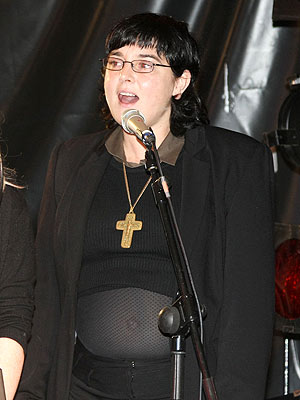
LOS ANGELES (LALATE) – Sinead O’Connor’s new look is surprising fans. Sinead O’Connor with her trademark bald head and amazing voice delivered a massive hit with “Nothing Compares 2 U.” Her appearance on Saturday Night Live, tearing up a picture of Pope John Paul II on live television, shocked a nation. But this week, a  new image (HERE) of her in PEOPLE is surprising fans.


“Nothing Compares 2 U” was twenty years ago. Now, O’Connor is in her forties and a mother of four. But after she appeared in a music festival in Bray, Ireland, PEOPLE posted a picture of her dramatic new look. Candace Cameron Bure tweeted in response “Is this really Sinead O’Connor? I honestly can’t tell it’s the same person.” PEOPLE said of the appearance “nothing compares to … who?”


O’Connor according to the news site wasn’t a headliner, but performed as only a backup singer. Her last album was 2005’s Throw Down Your Arms. And yes, she is still upset about the Vatican.


She recently told news “The Vatican and the pope need to get on their knees and confess the full truth in the same language they make us use in Mass.” She added “They need to get on their knees, open everything up, be transparent, tell the truth, ask the people for forgiveness and prayers.”

Read more at news.lalate.com
 

Sinead O’Connor Reveals New Look, While Still Angry at Pope

Amplify’d from news.lalate.com
Sinead O’Connor Reveals New Look, While Still Angry at Pope

Sinead O'Connor Reveals New Look, While Still Angry at Pope


LOS ANGELES (LALATE) – Sinead O’Connor’s new look is surprising fans. Sinead O’Connor with her trademark bald head and amazing voice delivered a massive hit with “Nothing Compares 2 U.” Her appearance on Saturday Night Live, tearing up a picture of Pope John Paul II on live television, shocked a nation. But this week, a  new image (HERE) of her in PEOPLE is surprising fans.


“Nothing Compares 2 U” was twenty years ago. Now, O’Connor is in her forties and a mother of four. But after she appeared in a music festival in Bray, Ireland, PEOPLE posted a picture of her dramatic new look. Candace Cameron Bure tweeted in response “Is this really Sinead O’Connor? I honestly can’t tell it’s the same person.” PEOPLE said of the appearance “nothing compares to … who?”


O’Connor according to the news site wasn’t a headliner, but performed as only a backup singer. Her last album was 2005’s Throw Down Your Arms. And yes, she is still upset about the Vatican.


She recently told news “The Vatican and the pope need to get on their knees and confess the full truth in the same language they make us use in Mass.” She added “They need to get on their knees, open everything up, be transparent, tell the truth, ask the people for forgiveness and prayers.”

Read more at news.lalate.com
 

Maryland Governor O'Malley Resisted Pressure from Baltimore Archbishop to Reject Marriage Equality

Amplify’d from www.towleroad.com

Maryland Governor O'Malley Resisted Pressure from Baltimore Archbishop to Reject Marriage Equality

In late July, Maryland Governor Martin O'Malley, a Catholic, came out in support of marriage equality in that state, declaring it an "administration priority".

Omalley Newly released letters show that O'Malley was pressured by Edwin F. O’Brien, the archbishop of Baltimore, to resist endorsing same-sex marriage because it, O'Brien said, "deeply conflicts with your faith."

Added O'Brien: "Preserving the central role of the natural family unit has always been — and should continue to be — the reason why our government recognizes marriage as existing between one man and one woman...Maryland is not New York. We urge you not to allow your role as the leader of our state to be used in allowing the debate surrounding the definition of marriage to be determined by mere political expediency. The people of Maryland deserve no less.”

Said O'Malley in reply: "As a free and diverse people of many faiths, we choose to be governed under the law by certain fundamental principles or beliefs, among them ‘equal protection of the law’ for every individual and the ‘free exercise’ of religion without government intervention...Other states have found a way to protect both these rights. So should Maryland...I have concluded that discriminating against individuals based on their sexual orientation in the context of civil marital rights is unjust. I have also concluded that treating the children of families headed by same-sex couples with lesser protections under the law than the children of families headed by heterosexual parents, is also unjust.”

Read both letters, AFTER THE JUMP...


072011obrienletter


O Malley's letter:


080411 Om Alley Letter

Read more at www.towleroad.com